Choosing car insurance can be confusing, especially when you hear terms such as liability insurance and full coverage. Understanding the difference can help you better evaluate your insurance options.
What Is Liability Car Insurance?
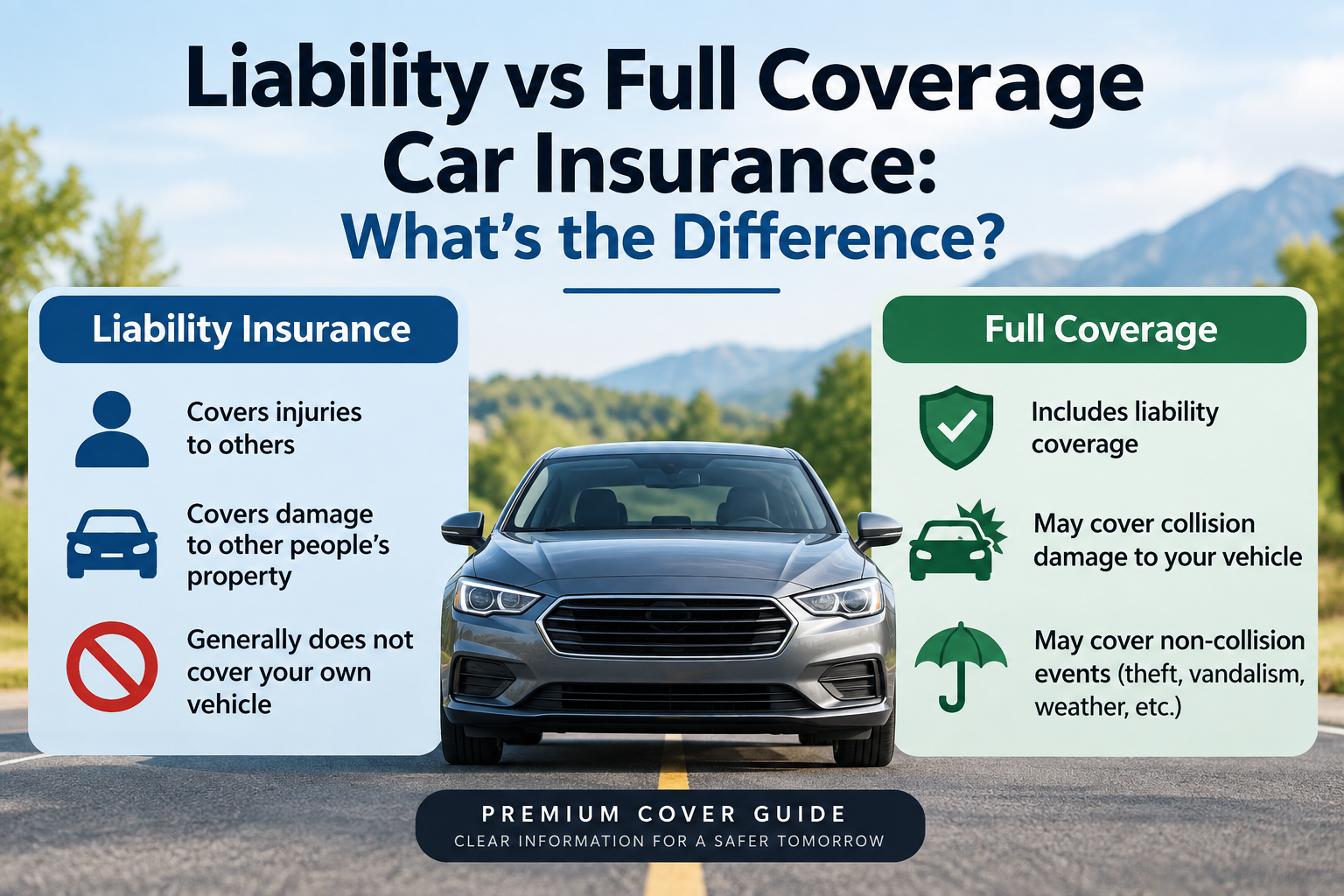
Liability insurance is designed to help cover costs when you are legally responsible for injuries or property damage caused to another person.
Liability coverage commonly includes:
Bodily Injury Liability
This may help pay for medical expenses, lost income, and certain other costs if another person is injured in an accident for which you are legally responsible.
Property Damage Liability
This may help cover damage you cause to another person’s vehicle or property.
Liability insurance generally does not pay to repair your own vehicle after an accident.
What Is Full Coverage Car Insurance?
“Full coverage” is an informal term rather than one specific insurance policy.
It usually refers to a combination of liability insurance plus additional protections such as:
Collision Coverage
Collision coverage may help pay to repair or replace your vehicle if it is damaged in a covered collision, subject to your deductible and policy terms.
Comprehensive Coverage
Comprehensive coverage may help with certain non-collision losses, such as theft, vandalism, falling objects, or some weather-related damage.
Liability vs Full Coverage
The biggest difference is the level of protection provided.
Liability insurance primarily protects you against certain costs associated with damage or injuries you cause to others.
Full coverage typically includes liability insurance while also adding protections that may help cover damage to your own vehicle.
Which Coverage Costs More?
Full coverage usually costs more than liability-only insurance because it includes additional types of protection.
Your premium may depend on factors such as:
- Your location
- Driving history
- Vehicle type
- Coverage limits
- Deductible
- Insurance provider
- Other rating factors permitted in your location
When Might Full Coverage Be Considered?
Drivers may consider broader coverage when they own a newer or higher-value vehicle or when a lender or leasing company requires certain types of physical damage coverage.
However, the right level of coverage depends on your personal circumstances, vehicle value, budget, and insurance needs.
Is Liability Insurance Enough?
Minimum insurance requirements vary by state and jurisdiction. Meeting a legal minimum does not necessarily mean the coverage will be sufficient for every accident or financial situation.
Before selecting coverage, consider your available limits, potential out-of-pocket costs, and the value of the vehicle being insured.
Final Thoughts
Liability and full coverage car insurance serve different purposes. Liability insurance generally focuses on certain damages or injuries you cause to others, while broader coverage may also help protect your own vehicle.
Always review the actual policy terms, exclusions, deductibles, and coverage limits before purchasing insurance.
Disclaimer: This article is for general educational purposes only and does not provide personalized insurance, legal, or financial advice. Coverage and requirements vary by insurer and location.